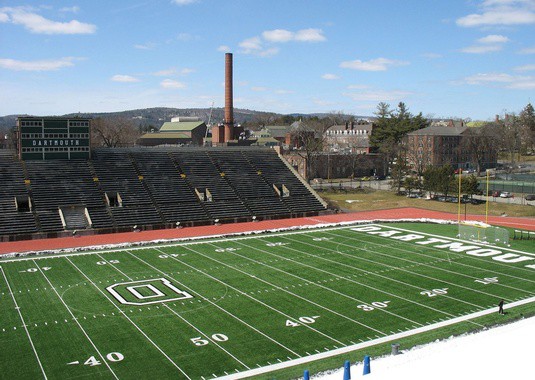
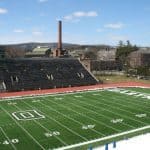
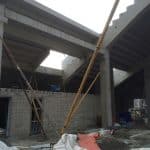
Engelberth Construction, the construction manager on the project, recommended precast concrete for the project to match the original seating, which was built in 1923 using steel framing and cast-in-place concrete, explains Dick Terk, vice president of project management at the company and the project manager for the job. It also was chosen for its longevity and high-quality appearance, he notes.
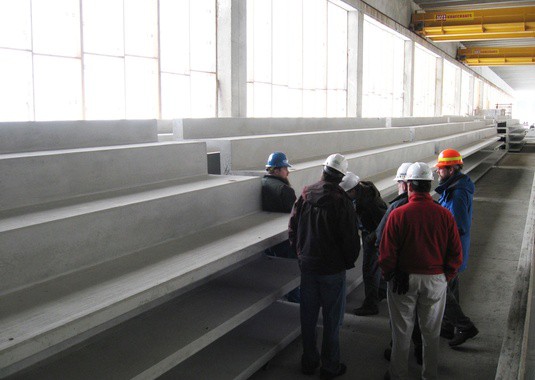
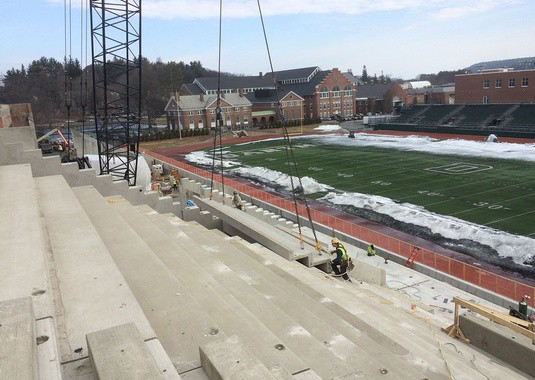
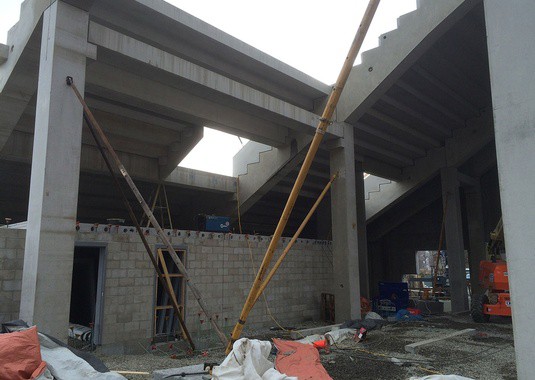
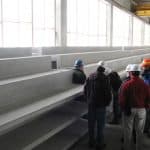
The work involves erecting 822 precast concrete components, including single, double, and triple risers, raker beams, restroom planks, platform slabs, columns, panels, L-beams, spandrels, stair/elevator shaft walls, steps, tie beams, vomitory panels and beams, and other pieces. J.P. Carrara & Sons Inc. is fabricating the components.
Carrara served on a design-assist basis on the project. “Their proposal for the project provided the best understanding of the challenges we faced and offered the best approach for meeting them,” says Terk. Adds Joe Carrara, President at J.P. Carrara, “The precast structure is highly complicated, using many custom beam, wall, raker and stadia bleacher sections. It required closer coordination among the design team than most projects to lay out and configure the precast framing.”
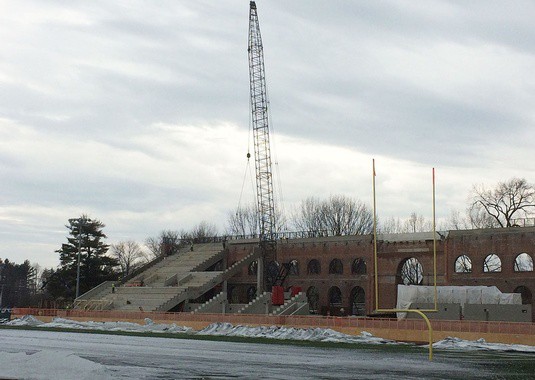
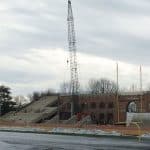
The key challenge arose in working around the existing 42-foot-tall brick façade, built in 1893, which features large arches that lead into the stadium. Crews cut the wall loose from the concrete seating that was serving as support and rebraced it while the steel and cast-in-place concrete was demolished and removed. Large openings were cut into the north wall of the stadium to provide access for construction. Foundations were installed south to north, working their way out toward the new openings, and fill was placed over them.
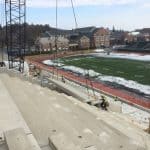
The 250-ton crane used for the erection took the same course, starting the erection at the south end and working its way back north. The crane had to be upgraded from a 150-ton unit because several of the pieces were too large to be handled with the smaller crane, and it had to be tall enough to clear restroom facilities built along the side. The crane pad was elevated to ensure clearance would not be a problem.
The precast components have been waiting for this moment for seven years, as trustees approved the project in 2008 but then postponed it as the recession hit. The pieces were cast over the next nine months and stored at an abandoned airfield in Windsor, Vermont, in a newly designed and constructed staging yard. Then they were delivered to the site as needed during the erection process. The erection will be finished in June, with a few final hollowcore slabs installed around the pressroom, a steel structure, in July 2015.